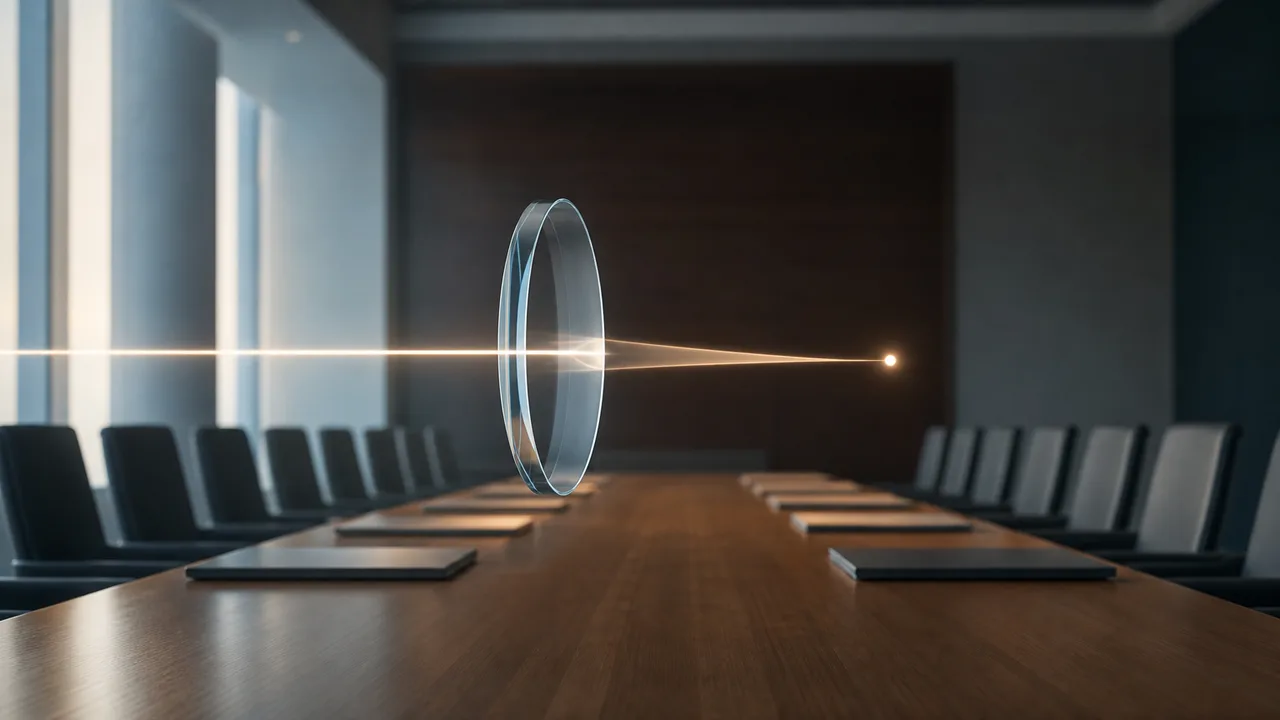
Vienna, October 13, 1995. A review conference of the states parties to the Convention on Certain Conventional Weapons adopted a document without a vote. In it, states agreed not to use laser weapons specifically designed to blind people permanently, and not to hand such weapons to anyone. At that point, no such weapon had been used in combat.
This protocol comes up often in stories about laser weapons. Yet it does not ban laser weapons as a whole. Using the treaty text and official UN and U.S. government sources, the sections below walk through what is prohibited, what stays outside the ban, and whether South Korea has joined.
A weapon banned before it reached the battlefield
Weapons rules usually come after the harm has piled up. This protocol went the other way. The UN Office for Disarmament Affairs (UNODA) presents the 1995 adoption of Protocol IV as "an example of a weapons system being pre-emptively banned before it was used." Its booklet names this proactive approach as one of the protocol's main merits.
It began in the late 1980s. A few states worried about lasers being used against people, but such weapons did not exist yet, so other states saw no reason to hurry. From 1989 to 1991, the International Committee of the Red Cross (ICRC) held four expert meetings on the dangers of laser weapons.
Throughout the talks, states looked for a text they could all accept. The text had to leave lasers free for use against enemy optical systems, while still protecting people who might be blinded. In January 1997, the U.S. President asked the Senate to approve the protocol. The State Department report sent with that request says the protocol aims to address the risk "in a timely way, before such weapons become commonplace."
What a laser weapon actually does is covered in What is a laser weapon? Film versus reality. How laser weapons have developed over time is covered in A history of laser weapons: from chemical to electric lasers.
Why eyes are especially vulnerable to lasers
The eye is built to gather light. At the front, the cornea and the lens bend incoming light and bring it to the retina at the back. The retina turns that light into the picture a person sees. Light that travels straight, like a laser beam, follows the same path and is gathered onto a small spot of the retina.
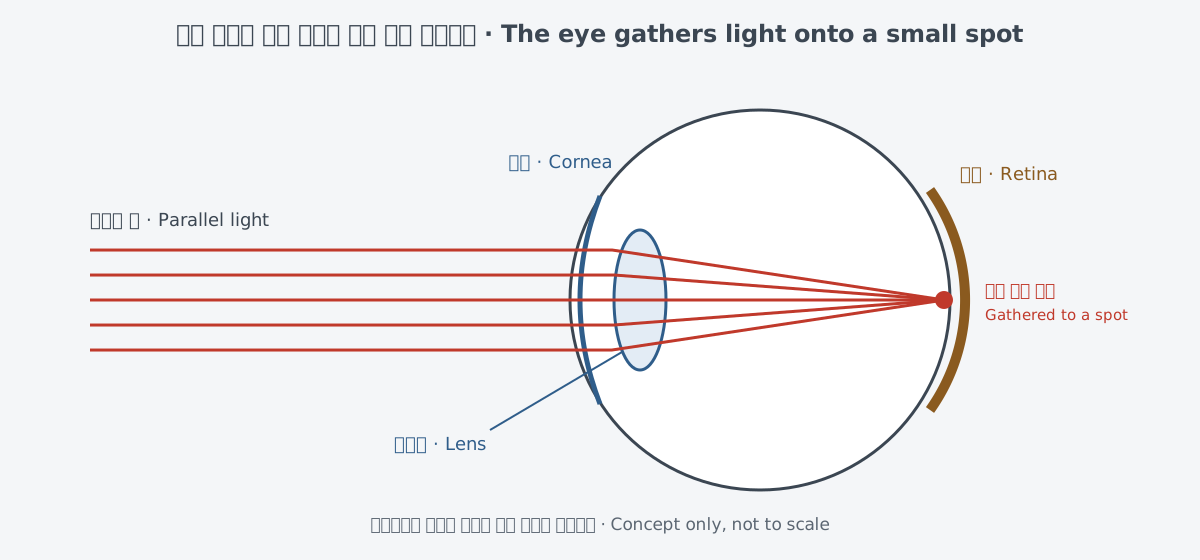
A UK health authority safety booklet says laser damage depends on the organ hit and is a particular hazard for the eyes, "where the eye lens can focus the beam." The 2013 guidelines of the International Commission on Non-Ionizing Radiation Protection (ICNIRP) go further. For visible and near-infrared light, the retina is much more susceptible to damage than any other part of the body. The reason is that the inside of the eye is transparent and the eye focuses the light.
Think of a magnifying glass that gathers sunlight to burn a hole in paper. The real eye is different in one way. You can put a magnifying glass away, but the eye gathers light the whole time you look, and the delicate retina sits right at the focus. Near-infrared light, which you cannot see, can be gathered this way too, as Why wavelength matters: visible and invisible light explains.
That is why laser safety rules protect the eyes first. The highest level of laser radiation that people can be exposed to under normal circumstances without harm is called the maximum permissible exposure (MPE). Laser classes and eyewear labels for everyday lasers are covered in Laser safety: classes and how to read eyewear labels.
The Convention on Certain Conventional Weapons and its Protocol IV
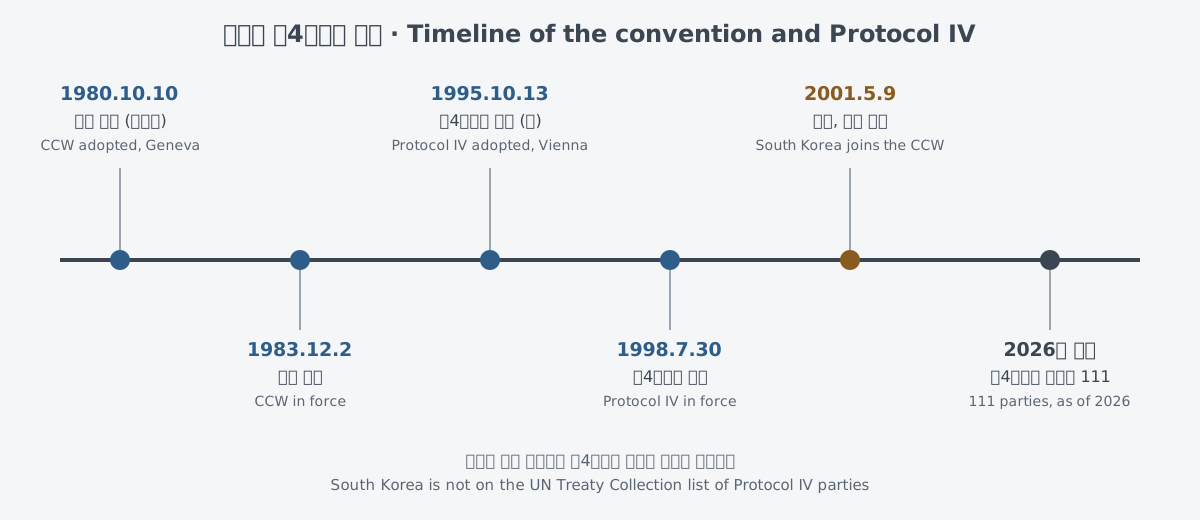
Protocol IV does not stand alone. It belongs to the Convention on Certain Conventional Weapons (CCW), adopted in Geneva on October 10, 1980, and in force since December 2, 1983. UNODA calls the CCW "a key international humanitarian law instrument." Its purpose is to ban or restrict weapons that are considered to cause unnecessary or unjustifiable suffering to combatants or to affect civilians indiscriminately.
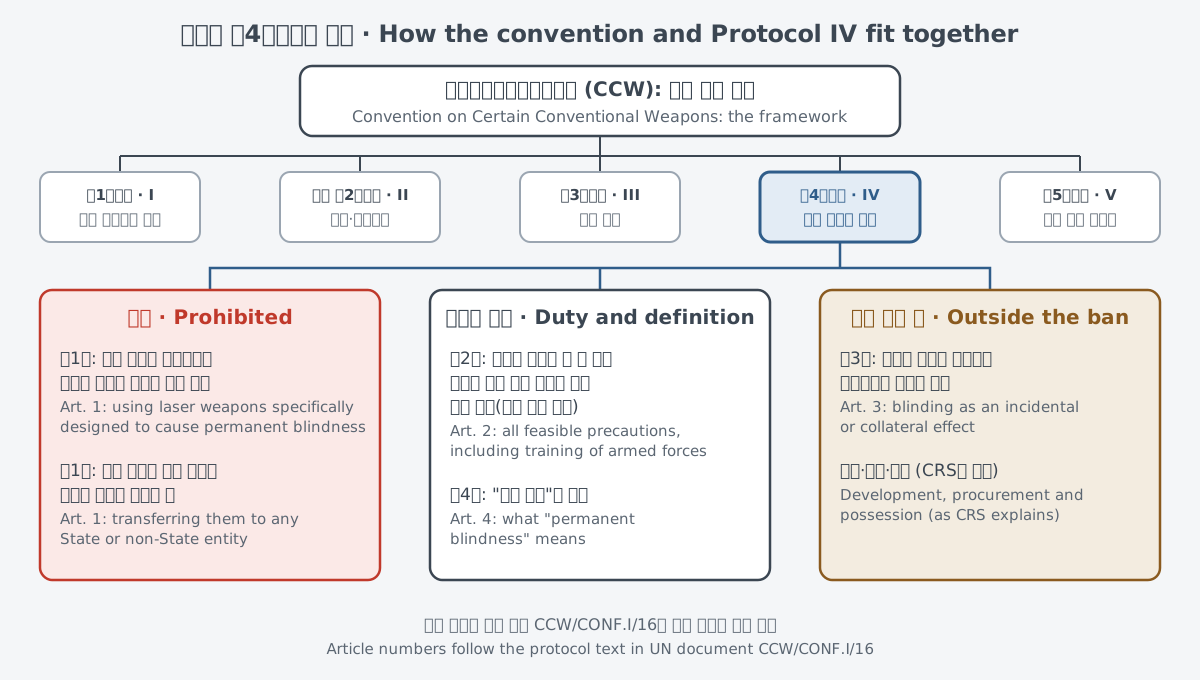
The convention has two layers. The framework convention holds general rules, such as how states join and how new protocols are negotiated. The actual bans and limits on particular weapons sit in the annexed protocols, and there are five today.
- Protocol I: non-detectable fragments
- Amended Protocol II: mines, booby traps and other devices
- Protocol III: incendiary weapons
- Protocol IV: blinding laser weapons
- Protocol V: explosive remnants of war
Protocol IV's title begins "Additional Protocol to the Convention on Prohibitions or Restrictions on the Use of Certain Conventional Weapons" and ends "(Protocol IV, entitled Protocol on Blinding Laser Weapons)." It was adopted in Vienna on October 13, 1995. On December 12 that year, the UN Secretary-General, as depositary, sent it to all states. It entered into force on July 30, 1998.
What the protocol prohibits
The protocol has only four articles, and they are short. The wording below is the official English text, checked against the protocol as printed in UN document CCW/CONF.I/16, the final document of the review conference.
Article 1 bans two things. First, "It is prohibited to employ laser weapons specifically designed, as their sole combat function or as one of their combat functions, to cause permanent blindness to unenhanced vision." Second, states "shall not transfer such weapons to any State or non-State entity."
Unenhanced vision means the naked eye, or the eye with corrective eyesight devices. The weight of the article rests on two phrases: "specifically designed" and "permanent blindness."
Article 4 defines the second. Permanent blindness "means irreversible and uncorrectable loss of vision which is seriously disabling with no prospect of recovery." The article adds that serious disability equals visual acuity of less than 20/200 Snellen measured using both eyes.
Article 2 sets a duty rather than a ban. When states parties use laser systems, they "shall take all feasible precautions to avoid the incidence of permanent blindness to unenhanced vision." These precautions include training of their armed forces and other practical measures. The UNODA booklet also reads this article as stressing precautions against incidental permanent blindness.
What the protocol leaves outside the ban
Article 3 sets the edge of the ban. It reads: "Blinding as an incidental or collateral effect of the legitimate military employment of laser systems, including laser systems used against optical equipment, is not covered by the prohibition of this Protocol." The UNODA booklet gives the example of blinding that happens unintentionally during the legitimate use of other laser systems, such as range-finders.
That does not mean there is no duty. Using such systems still calls for "all feasible precautions" to avoid causing permanent blindness. Article 2 fills that role.
The protocol also covers only certain acts. In its report on Defense Department directed-energy weapons (DEW), the Congressional Research Service (CRS) explains that the protocol "does not cover the development, procurement, or possession of such weapons." What Article 1 bans is use and transfer.
The 1996 final declaration of the review conference also left these wider questions for the future. In it, the conference recognized the need for a total ban on blinding laser weapons and said it wished to keep the blinding effects of laser systems under consideration. The questions it listed include bans on the use, production, stockpiling and transfer of blinding laser weapons, and the question of compliance. Another is the definition of "permanent blindness," including the concept of field of vision.
Which states, including South Korea, have joined
According to UNODA, as of 2026, 128 states had ratified or joined the CCW, and 111 were parties to Protocol IV. The UN Treaty Collection status page for Protocol IV also lists 111 parties.
South Korea joined the CCW on May 9, 2001. However, as of 2026, the Republic of Korea is not on the UN Treaty Collection list of parties to Protocol IV. A state that joins the convention still chooses which protocols bind it. The UN Treaty Collection records Protocols I to III inside the convention status and Protocol IV in a separate status record.
The United States ratified Protocol IV on December 23, 2008, and it entered into force for the United States on July 21, 2009. Some states made declarations when they joined. Australia stated its understanding that the provisions of Protocol IV "shall apply in all circumstances." Ireland stated that provisions which may also apply in peacetime "shall be observed at all times," and several states made the same declaration.
High-energy laser weapons and the protocol, according to official sources
The lasers being developed today against drones and missiles are high-energy laser (HEL) weapons. CRS groups them as one branch of directed-energy weapons. A directed-energy weapon uses concentrated electromagnetic energy, rather than kinetic energy, against an opponent, and high-power microwave weapons belong to the same group. The difference between the two branches is covered in Lasers and high-power microwaves: two kinds of directed energy.
The arms control section of the same report states that "some applications of DE weapons are prohibited" and gives Article 1 of Protocol IV as the example. It then leaves a question for Congress: in what circumstances and for what purposes should the U.S. military's use of these weapons be permitted?
The shipboard laser report is more direct: the light from Navy solid-state lasers in development "is of a frequency that can cause permanent damage to human eyesight, including blinding." Blinding can occur at ranges much greater than the ranges for damaging targets. Light scattered off the target, fog or particles in the air can also pose a risk to exposed eyes. How this warning sits beside the other limits in official reports is covered in Strengths and limits of laser weapons.
A footnote there also gives the view of the U.S. Department of Defense. The department "views the protocol as fully consistent with DOD policy." It also believes the lasers in the report fit its policy. That policy prohibits using lasers specifically designed to cause permanent blindness to the naked eye or to the eye with corrective eyesight devices.
Set side by side, the official sources show two things at once. The protocol asks what a weapon is designed for. It also requires anyone using lasers to take precautions against blinding, whatever the design purpose. When a news story mentions a "blinding laser," it helps to see first which of the two it is about.
How to read laser weapon news: "kW-class", "range" and "cost per shot" collects tips for reading such stories.
What to read next
- Lasers, interceptor missiles and guns: how they share the work: the place lasers take among defense tools
- Laser weapon programs that have been made public: laser weapon programs known from official announcements
- Laser safety: classes and how to read eyewear labels: the rules that protect eyes from everyday lasers
- A laser weapon is more than a laser: the system at a glance: the parts that make up a laser weapon system
- Why a laser weapon does not finish "the instant it fires": why the effect takes time even though the light arrives at once