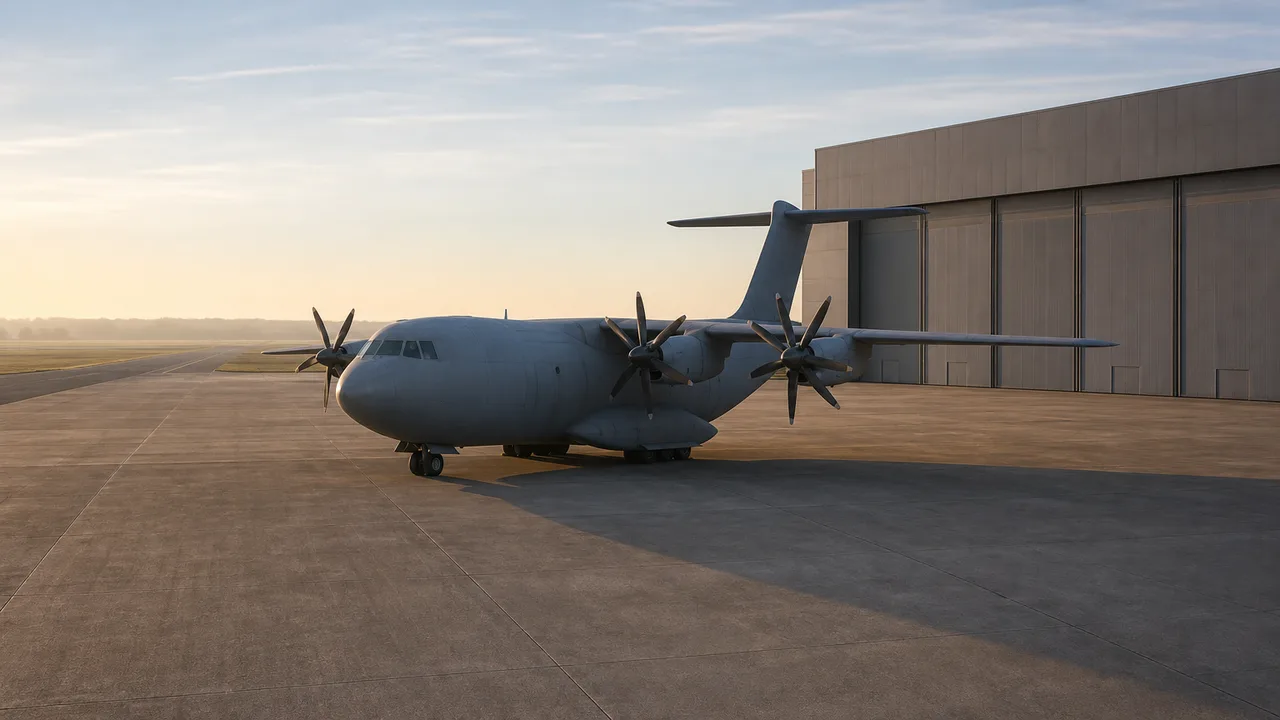
There is a transport aircraft known for carrying cargo and dropping it from the air. This time, one of them was handed over as the starting point for a plane that will fly the U.S. Navy's airborne nuclear command-and-control support mission.
What the U.S. Navy received on October 15 at Lockheed Martin's plant in Marietta, Georgia, was a single C-130J-30 Super Hercules. It is not a mission aircraft yet. Another company has to fit it with equipment, and it has to pass tests on the ground and in the air. Only then does it start work under the name E-130J Phoenix II.
So what exactly was handed over, and what is still ahead? This letter pulls together the company announcement and two media reports.
This letter in brief
- On October 15, Lockheed Martin handed over the first C-130J-30 transport that the U.S. Navy will convert into the E-130J Phoenix II.
- The public plan sends the airframe to Northrop Grumman for mission systems, then ground testing, developmental flight testing and fielding, so that it can take over from today's E-6B.
- No date has been given for finishing the conversion, starting tests or fielding the aircraft, and no cost for this delivery.
What was announced
In an October 16 press release, Lockheed Martin said it had delivered one C-130J-30 Super Hercules to the U.S. Navy the day before, on October 15, at its Marietta plant. The heart of the announcement is that this aircraft will become the future platform for the TACAMO (Take Charge and Move Out) mission. TACAMO is the name of the U.S. Navy's airborne nuclear command-and-control support mission.
The aircraft will be turned into the E-130J Phoenix II, the Navy's next-generation TACAMO mission platform. In the order the release describes, the aircraft moves to Northrop Grumman, the mission systems integrator. There, the E-130J TACAMO industry team completes the conversion. After that, it enters service as the E-130J Phoenix II.
The release also carries words from the Navy side. The program manager for the Navy's airborne strategic command, control and communications program (PMA-271) said the effort is now moving into mission systems integration to field the E-130J Phoenix II.
The same day, the European defense outlet Defence Industry Europe covered the news. In its account, the Navy received the first C-130J-30 to be converted into the E-130J Phoenix II, its next-generation airborne nuclear communications aircraft. This newly built airframe, the outlet added, is one of an initial three aircraft the Navy bought in September 2024. It framed the delivery as the first step in a planned move of the TACAMO mission away from the E-6B Mercury.
What is publicly known
The table below holds only what the company announcement and media reports state. The right-hand column shows who said it.
| Item | What was announced or reported | Source |
|---|---|---|
| Delivery | One C-130J-30 Super Hercules. October 15, at the plant in Marietta, Georgia | Lockheed Martin press release |
| Future aircraft | E-130J Phoenix II. The Navy's next-generation TACAMO mission platform | Lockheed Martin press release |
| Mission name | TACAMO. The U.S. Navy's airborne nuclear command-and-control support mission | Lockheed Martin press release |
| Aircraft being replaced | First step in a planned move of the TACAMO mission away from the E-6B Mercury | Defence Industry Europe. Janes (2024) also covers the program as an E-6B replacement |
| Conversion | Northrop Grumman leads the conversion as prime contractor and mission systems integrator | Defence Industry Europe. The Lockheed Martin release calls it the mission systems integrator |
| Communications gear | Collins Aerospace provides the VLF communications systems | Defence Industry Europe |
| Next steps | Post-delivery processing, mission-system modification, ground testing and developmental flight testing, then operational fielding | Defence Industry Europe |
| Program context | Part of the modernization of the U.S. Nuclear Command, Control, and Communications (NC3) architecture | Defence Industry Europe |
The Navy's hopes for the new aircraft appear in that report too. Per Defence Industry Europe, the Navy said the new platform would provide greater endurance, capacity and operational reach. No test results have yet shown how well it meets those hopes.
The technology, explained
The C-130J-30, the base for the E-130J, is a version of the C-130J transport with a stretched fuselage. Why start from a transport? In its press release, Lockheed Martin presented the Super Hercules as a domestically produced, long-endurance, four-engine platform. It also pointed to advanced avionics, increased power, greater range, fuel efficiency and payload capacity.
The company also stressed that one base aircraft serves many missions. By its account, the C-130J is certified for 20 mission sets and is the only tactical airlifter with a global fleet of more than 570 aircraft. The missions include airdrop, search and rescue, firefighting, medical evacuation, intelligence, surveillance and reconnaissance (ISR), and special operations. Why long endurance matters for surveillance is covered in ISR drones: why endurance matters.
On the equipment side, the term that stands out is the VLF communications system. VLF is short for very low frequency: the system uses radio waves whose frequency is very low. Radio waves are electromagnetic waves, just like light, and the lower the frequency of an electromagnetic wave, the longer its wavelength.
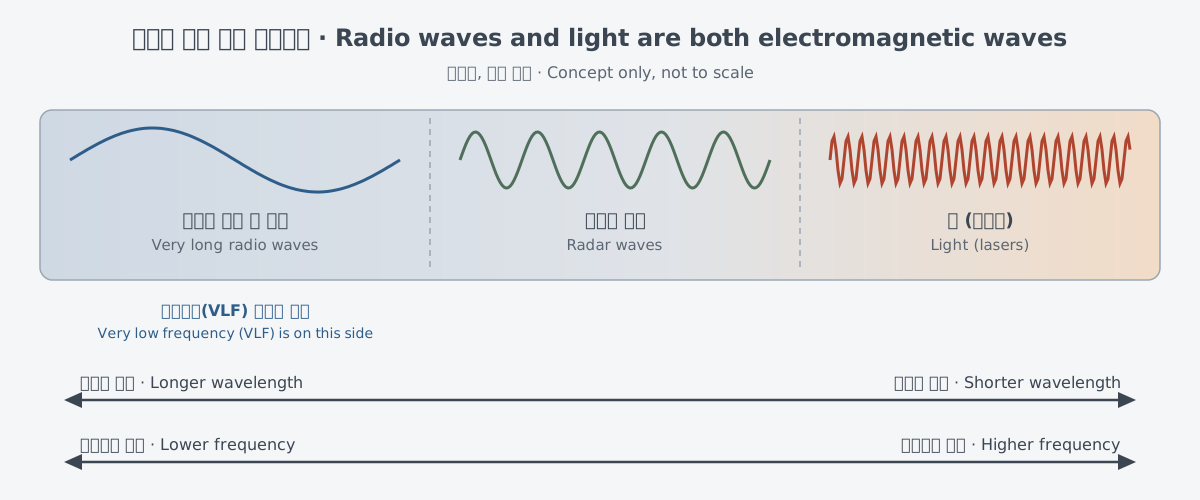
So VLF radio waves sit on the same line as radar waves and laser light, but far over on the long-wavelength side. The light in this site's laser articles and the Navy's communication waves are not different kinds of thing but sit at different places on one line. The link between wavelength and frequency is explained in Light basics: waves, wavelength, frequency and photons. A device that measures distance with radio waves is covered in Radar: measuring distance and motion with radio waves.
What is new
This is not the first time the Hercules family has flown TACAMO. Lockheed Martin said the delivery re-establishes the link between the TACAMO mission and the Hercules family. The earlier aircraft was the EC-130Q. Defence Industry Europe reported that the Phoenix II name recalls the Navy's use of the EC-130Q Hercules for TACAMO during the Cold War.
Sources differ on when the EC-130Q left the mission. The Lockheed Martin release says it flew the mission for three decades, from 1963 until 1993. A 2024 Janes article says the E-6 replaced the EC-130Q in 1992. The final year is off by one.
After the EC-130Q came the E-6 family. The current plan moves the mission from today's E-6B Mercury back to the Hercules family, in the form of the E-130J.
The company doing the conversion was not picked just now, either. In a December 20, 2024 article, Janes reported that the U.S. Navy had awarded Northrop Grumman a $3.4 billion engineering and manufacturing development (EMD) contract. The contract is for integrating the TACAMO nuclear command-and-control system aboard the E-130J. That figure is the size of a development contract, not the price of the one aircraft just delivered.
That article also lays out the next part: Northrop Grumman will integrate a Collins Aerospace VLF antenna and deployment system with three government-furnished EMD E-130Js. Six more E-130Js are expected to follow the EMD aircraft, starting in FY 2028. That plan comes from the 2024 article, and the delivery announcement does not mention these numbers.
Limits and open questions
The biggest gap is the schedule. Neither the Lockheed Martin release nor the Defence Industry Europe article gives a date for finishing the conversion, starting tests or fielding the aircraft. The cost of this delivery is not given either.
The aircraft counts also need lining up. One aircraft was delivered this time. Defence Industry Europe called it one of an initial three bought in September 2024, while a December 2024 Janes article listed three EMD aircraft plus six to follow. The sources at hand cannot confirm whether the two outlets' "three aircraft" are the same airframes.
The only equipment named in the announcement and the report is the VLF communications system from Collins Aerospace. What the aircraft will carry, and in what form, is not spelled out.
What to watch next
Here is the order of the next steps. Per Defence Industry Europe, after post-delivery processing the aircraft goes through mission-system modification, ground testing and developmental flight testing in turn. Only after these steps does it move on to operational fielding.
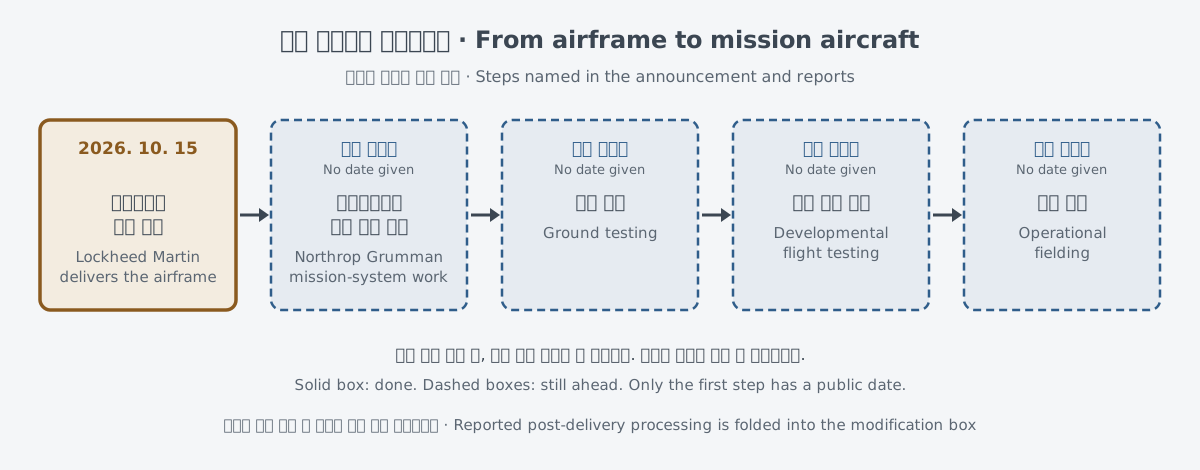
A 2024 Janes article described a plan for six more aircraft to follow the EMD aircraft, starting in FY 2028. The new announcement did not repeat it. No start dates have been announced for any of the steps. In future announcements, watch for whether these steps come with dates.
What to read next
- Light basics: waves, wavelength, frequency and photons: covers why radio waves and light are both electromagnetic waves, and how wavelength and frequency relate.
- Radar: measuring distance and motion with radio waves: shows how another device that uses radio waves does its job.
- ISR drones: why endurance matters: explains intelligence, surveillance and reconnaissance, one of the missions on the C-130J's list.