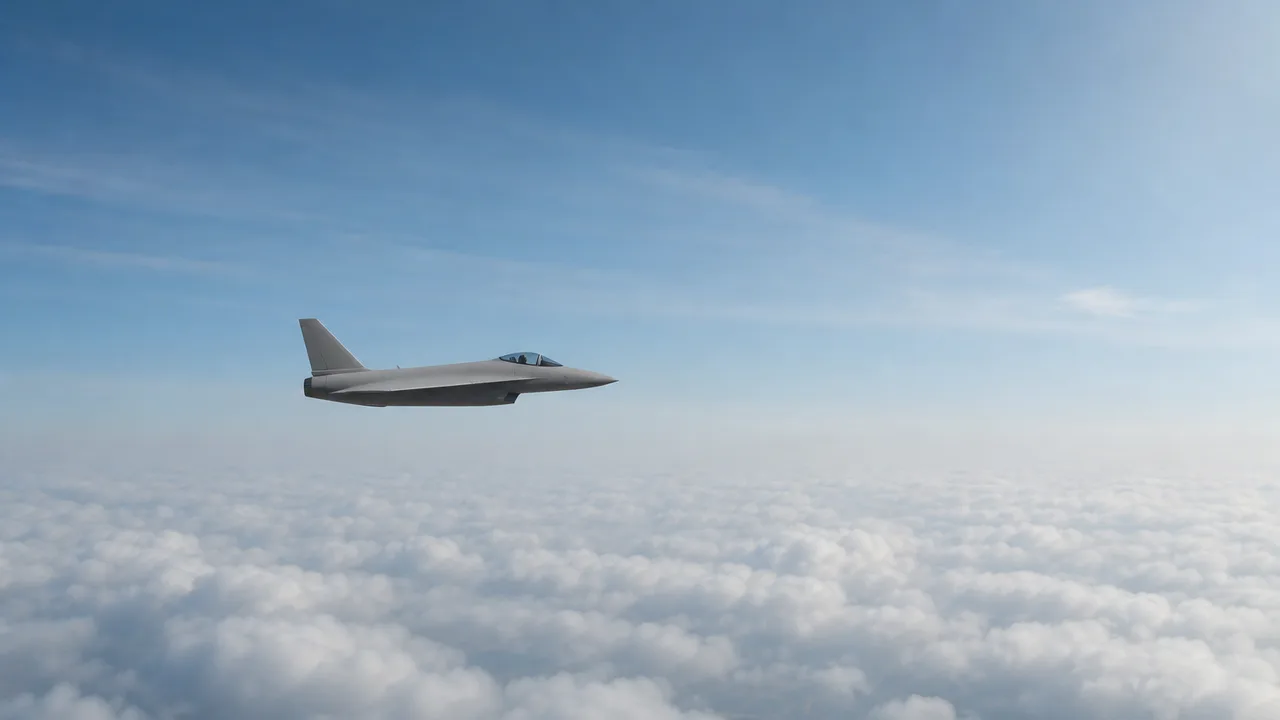
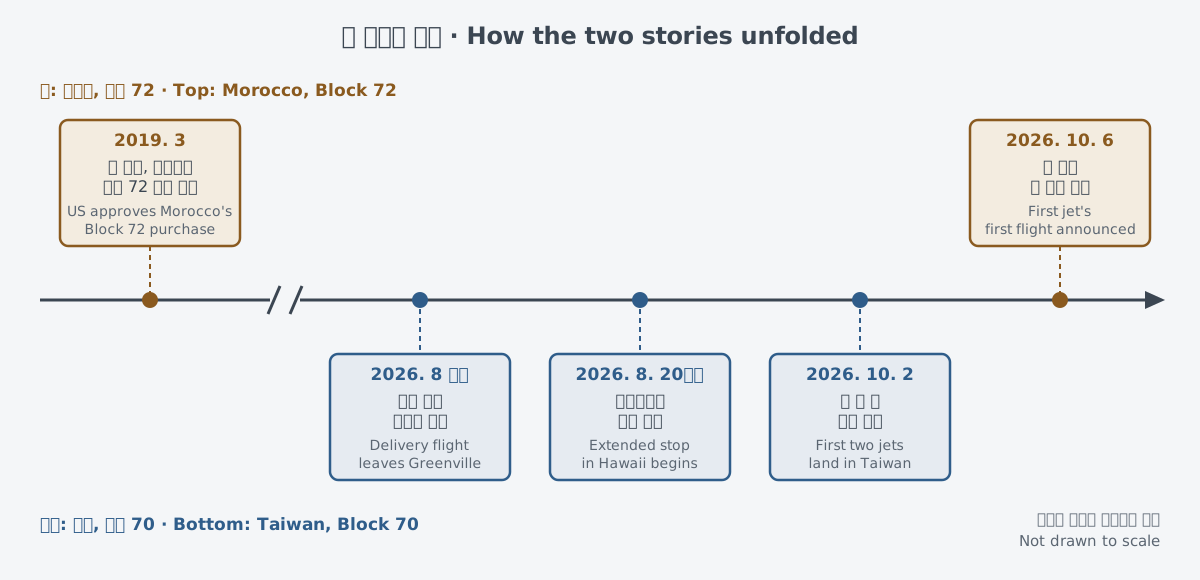
In mid-August, two F-16s left Greenville, South Carolina. They stopped in Hawaii and landed in Taiwan on October 2. Four days later came news that Morocco's first jet had taken to the air for the first time at Lockheed Martin's site in the same city.
The two jets are new versions of the F-16, Block 70 and Block 72. The numbers differ, but apart from the engine, the two share the same major equipment package, according to reports. So what is shared, and what is not? And when will the rest of the jets reach each country?
The Morocco story rests on a manufacturer press release. The Taiwan story comes from defense media reports, not from a Taiwanese government statement.
This letter in brief
- On October 2, media reported that Taiwan had received its first two F-16 Block 70s, and on October 6, Lockheed Martin announced the first flight of Morocco's first Block 72.
- Lockheed Martin says both versions carry the APG-83 radar and an airframe built for 12,000 hours, and TWZ reported that the difference between them is the engine.
- No one has yet said when Morocco's jet will be delivered, how many more jets will reach Taiwan by the end of the year, or why the delivery flight stayed so long in Hawaii.
What was announced
In an October 6 press release datelined Greenville, Lockheed Martin announced the successful first flight of the first F-16 Block 72 for the Royal Moroccan Air Force (RMAF). In the company's words, it was a key milestone as the jet moves through flight testing toward first delivery.
In the release, Block 72 is "the newest and most advanced variant" of the F-16 Fighting Falcon. The features the company lists are modernized avionics, advanced sensors, improved mission systems, and enhanced safety and reliability features. No figures come with these features.
This first jet is a two-seat F-16D. The first flight took place at Lockheed Martin's facility in Greenville. The jet will now go through flight testing before delivery to Morocco.
The Taiwan news came first: on October 2, TWZ and Defence Industry Europe reported that Taiwan's first two F-16Cs had landed, out of its order for 66 F-16C/D Block 70s. The two jets came after nearly seven years of waiting and are the first factory-new fighters delivered to Taiwan in 25 years. Their arrival opens the aircraft acceptance and integration phase of the Taiwanese air force program. That day, TWZ reported, Taiwan's defense minister said more jets will arrive before the end of the year but gave no number.
What is publicly known
The table gathers the numbers and details from both stories, with sources.
| Item | Details | Source |
|---|---|---|
| Morocco's first jet | A two-seat F-16D. First flight at Lockheed Martin's Greenville facility | TWZ (citing the company announcement) |
| Morocco order | First customer to pick Block 72. At the US approval in March 2019, Morocco sought 25 F-16C/D Block 72s in a package estimated at $3.787 billion | TWZ (citing the DSCA at the time) |
| Taiwan order | 66 new-build F-16C/D Block 70s, worth about $8 billion | TWZ |
| How Taiwan bought them | The US Foreign Military Sales (FMS) program | Defence Industry Europe |
| More jets for Taiwan | More to arrive before the end of the year. No number given | TWZ (Taiwan's defense minister) |
| Deliveries and backlog, October story | At least 37 Block 70s delivered (Bahrain, Bulgaria, Slovakia). Backlog of about 123 Block 70 and 72 jets (Bulgaria, Taiwan, Morocco, Jordan, Peru) | Defence Industry Europe (Taiwan arrival story) |
| Deliveries and backlog, second-quarter earnings story | Block 70/72 backlog of 119, 41 delivered, customers in seven countries | Defence Industry Europe (citing Lockheed Martin data) |
The DSCA is the US Defense Security Cooperation Agency. The 25 jets Morocco sought and the dollar figure come from this agency's 2019 announcement.
The backlog and delivery counts sit on two rows. The two stories came out at different times, and the delivery counts also cover different groups. The 37 in the first story counts Block 70 only, while the 41 in the second counts Block 70 and 72 together.
The technology, explained
The "Block" after F-16 is a name that splits one aircraft type into versions. Lockheed Martin calls Block 72 a variant of the Fighting Falcon, and TWZ describes Block 70 and 72 as two configurations.
So how do the two configurations differ? Per TWZ, the answer is the engine. Block 70 uses General Electric's F110-GE-129, and Block 72 uses Pratt & Whitney's F100-PW-229. Otherwise, the two share the same major avionics and systems modernization package.
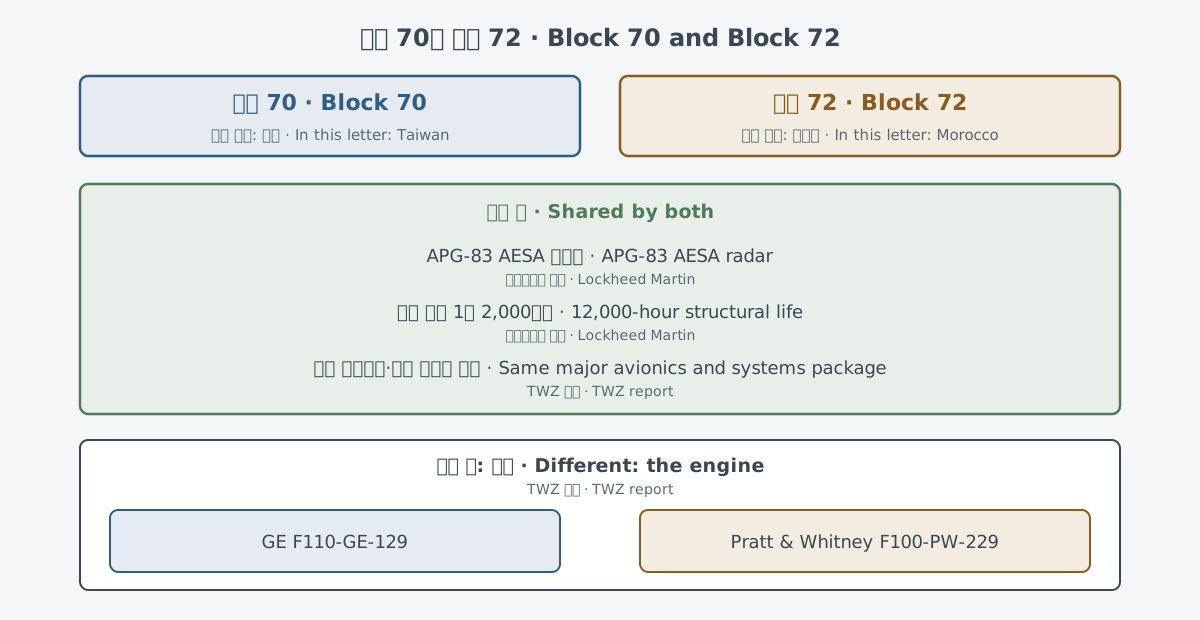
Lockheed Martin's product page describes the two versions together as Block 70/72. The first thing that stands out there is the radar. Block 70/72 carries Northrop Grumman's APG-83 radar. This radar is an active electronically scanned array (AESA) type.
Lockheed Martin's claim is that the APG-83 gives Block 70/72 "5th Generation fighter radar capabilities," because it shares hardware and software with the AESA radars on the F-22 and F-35. The basic idea of radar, sending out radio waves and reading the reflections to find distance and motion, is covered in Radar: measuring distance and motion with radio waves.
The other item is the life of the airframe structure. The company puts the structural life of Block 70/72 at 12,000 hours. That is more than 50% beyond earlier production F-16s, and by the company's count it means at least 40 years of service for most air forces.
What is new
Taiwan's deliveries ran very late. TWZ reported that Taiwan had expected deliveries to begin much sooner, but production-line adjustments, supply-chain problems and software issues all added to the delay. COVID also affected the production line. The minister had said several times that the first jets would arrive by the end of September, but that deadline passed without an F-16 reaching Taiwan.
Lockheed Martin's deliveries had also paused for a time. In Defence Industry Europe's account of its second-quarter earnings call, Lockheed Martin had resumed F-16 deliveries. The restart followed a redesign and a second round of flight tests on a new variant that had fallen short of expectations earlier this year.
On that call, company management did not name the variant or describe the technical issue. So it is not known whether the redesign is linked to the Taiwanese or Moroccan jets.
Limits and open questions
For Morocco, the biggest gap is the delivery date. The release says only that the jet is moving through flight testing toward first delivery. The release "today announced" the flight on October 6 and does not give the day the jet actually flew.
For Taiwan, the schedule for the remaining jets is blank. The minister's word was "before the end of the year," with no number. The reason for the long stay in Hawaii is also unknown. Defence Industry Europe reported that the jets stayed in Hawaii from August 20, and that neither side gave a reason.
The sources also carry different weight. Morocco's first flight and the Block 70/72 radar and structural life come from manufacturer material. The Taiwan facts and the 2019 approval figures all come through media reports, and this letter could not include the original statements from Taiwan's defense ministry or the DSCA.
Some numbers do not match. The order backlog is about 123 in the October story and 119 in the second-quarter earnings story. No company statement in this set of sources reconciles the two.
What to watch next
Morocco's first jet continues flight testing, and first delivery comes after that. This is the order given in the Lockheed Martin release and the TWZ story.
If the minister's word holds, more jets will reach Taiwan before the end of the year. Citing Taiwanese air force information, TWZ reported that the remaining jets will pass production, flight-test and acceptance milestones before being flown to Taiwan.
What to read next
- Radar: measuring distance and motion with radio waves: the round-trip timing and Doppler effect behind fighter radars such as the APG-83.